Breed profile
Pug
Explore the care, lifestyle and household factors that matter before making a commitment.
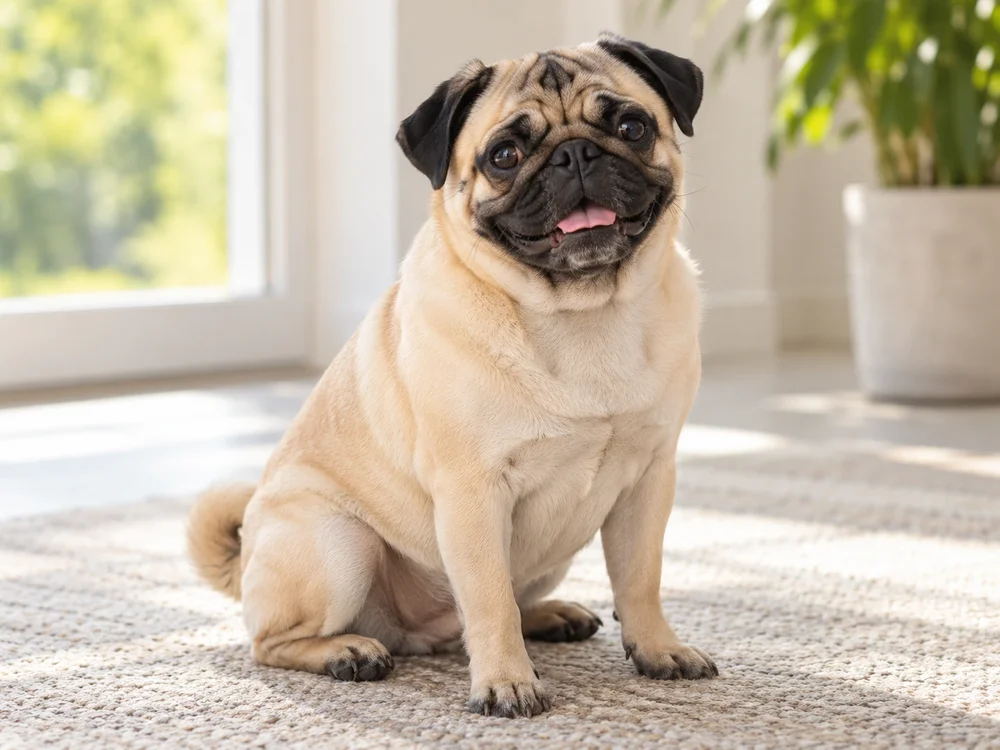
SizeSmall
ExerciseLow
GroomingLow
ChildrenGood
BarkingVery low
HealthVery high
What this means
Source-linked data has been researched to help you make an informed decision about life with this breed.
Read how evidence is handledAt a glance
Key facts
Size classSmall
Adult weight6 to 8 kg
Exercise needLow
Energy levelModerate
BarkingVery low
Grooming effortLow
Health burdenVery high
Breed profile
Life with this breed
Home and lifestyle
- Flat suitability
- Good fit
- Alone tolerance
- Very low
- Energy level
- Moderate
- First-time owner fit
- Good fit
Care and training
- Minimum daily exercise
- 45 minutes
- Mental stimulation
- Moderate
- Trainability
- Moderate
- Grooming effort
- Low
- Professional grooming
- Low maintenance
- Shedding
- Moderate
Household fit
- Children
- Good
- Dogs
- Good
- Cats
- Good
- Prey drive
- Very low
- Visitors
- Very good
Health and evidence
- Health burden
- Very high
- Heat tolerance
- Very poor
- Cold tolerance
- Poor
Health-burden evidence confidence: Medium.
Recorded health considerations
- Brachycephalic obstructive airway syndrome (BOAS)
- Eye problems
- Eyelid problems
- Skin infections
- Luxating patellas
- Pug Dog Encephalitis (PDE)
- Hemivertebrae
- Elbow dysplasia
- Hip dysplasia
- Legg-Perthes disease
- Hypothyroidism
These are breed-level considerations, not a diagnosis or a guarantee that an individual dog will be affected.
Flat-faced conformation can affect breathing and heat regulation.
Children and pets need supervision and careful introductions. Individual behaviour varies.